
OLED Screen Modules: A Deep Dive into Technology, Преимущества, and Market Differentiation
In the rapidly advancing display industry, Олинг (Органический светоизлучающий диод) screen modules have emerged as a revolutionary technology, redefining visual experiences across consumer electronics, automotive systems, and industrial applications. Unlike traditional LCDs, OLEDs offer self-emissive pixels, enabling unparalleled contrast ratios, энергоэффективность, и гибкость дизайна. This article explores the fundamentals of OLED screen modules, their unique characteristics, and their competitive edge over other display technologies.
1. What is an OLED Screen Module?
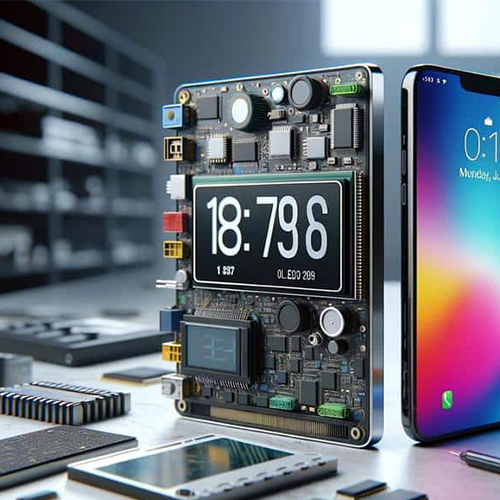
An OLED screen module is a self-contained display unit comprising an array of organic light-emitting diodes, driver circuits, and encapsulation layers. Each pixel in an OLED module emits its own light when an electric current passes through organic semiconductor materials, eliminating the need for a backlight. This self-emissive property allows for true blacks, infinite contrast ratios, and ultra-thin designs410.
Key Components of an OLED Module:
- Substrate: Typically glass or flexible plastic, serving as the structural base.
- Anode (ЭТОТ): A transparent conductive layer (indium tin oxide) that injects holes into the organic layers.
- Органические слои:
- Hole Transport Layer (HTL): Facilitates hole movement from the anode.
- Emissive Layer (EL): Where electron-hole recombination produces light.
- Electron Transport Layer (ETL): Transports electrons from the cathode.
- Cathode: Metal electrode (НАПРИМЕР., aluminum) that injects electrons.
- Encapsulation: Protects organic layers from moisture and oxygen using thin-film barriers or rigid glass710.

2. Types of OLED Screen Modules
OLED modules are categorized based on driving mechanisms and use cases:
2.1 Passive-Matrix OLED (PMOLED)
- Структура: Simplified design with perpendicular anode/cathode strips.
- Плюс: Бюджетный, suitable for small displays (НАПРИМЕР., носимые устройства, MP3 players).
- Минусы: High power consumption, limited resolution, and scalability18.
2.2 Active-Matrix OLED (АМОЛЕД)
- Структура: Integrates thin-film transistors (TFTs) for precise pixel control.
- Плюс: High resolution, энергоэффективность, and suitability for large screens (смартфоны, Телевизоры).
- Минусы: Complex manufacturing, higher costs410.
2.3 Flexible OLED (FOLED)
- Substrate: Uses bendable materials like polyimide.
- Приложения: Curved smartphones, foldable tablets, and rollable TVs810.
2.4 Transparent OLED (TOLED)
- Особенность: Up to 85% transparency when inactive.
- Use Cases: Retail displays, augmented reality (AR) windshields8.
3. Advantages of OLED Screen Modules
3.1 Превосходное качество изображения
- Самоизлучающие пиксели: Each pixel emits light independently, enabling perfect blacks и infinite contrast ratios, unlike LCDs that rely on backlight bleed13.
- Широкие углы просмотра: Maintains color accuracy up to 178°, ideal for public displays and automotive dashboards10.
- Fast Response Time: <0.1ms, eliminating motion blur in gaming and VR applications10.
3.2 Design Flexibility
- Ultra-Thin Profile: OLED modules can be as thin as 0.3мм, compared to LCDs (~3mm)4.
- Bendable and Foldable: FOLED modules enable innovative form factors like Samsung’s Galaxy Z Fold series10.
3.3 Энергоэффективность
- Pixel-Level Dimming: Dark pixels consume zero power, reducing energy use by up to 40% versus LCDs13.
- Low Voltage Operation: Typically requires 3–5V, ideal for battery-powered devices7.
3.4 Environmental Resilience
- Wide Temperature Range: Operates reliably from -40°C to 70°C, suitable for automotive and industrial use10.
- Долговечность: Flexible modules resist vibration and mechanical stress4.
4. OLED против. Competing Display Technologies
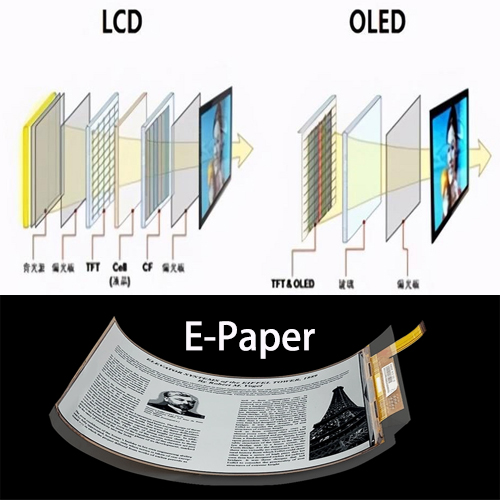
4.1 OLED против. LCD Modules
| Параметр | Олинг | ЖК-дисплей |
|---|---|---|
| Подсветка | Self-emissive, no backlight | Requires LED/LCD backlight |
| Соотношение контрастности | ∞:1 (true blacks) | ~1000:1 (limited by backlight) |
| Толщина | <1мм | 3–5mm |
| Response Time | <0.1ms | 1–5ms |
| Гибкость | Да (FOLED) | Нет |
| Энергопотребление | Lower in dark scenes | Fixed backlight draws constant power |
| Продолжительность жизни | 5–10 years (varies by color) | 10+ годы (more stable) |
| Расходы | Higher (АМОЛЕД) | Lower (mature manufacturing) |
Key Takeaway: OLED excels in image quality and design versatility but lags in longevity and cost-effectiveness413.
4.2 OLED против. MicroLED
- Яркость: MicroLED supports higher brightness (>2000 nits) for outdoor use.
- Efficiency: MicroLED offers better energy efficiency but remains prohibitively expensive for mass production.
- Продолжительность жизни: MicroLED outperforms OLED in durability (>100,000 hours)10.

5. Applications of OLED Screen Modules
- Бытовая электроника:
- Смартфоны (НАПРИМЕР., iPhone, Samsung Galaxy)
- Foldable tablets and laptops4.
- Автомобиль:
- Digital dashboards, heads-up displays (HUD), and rear-seat entertainment10.
- Healthcare:
- Surgical monitors requiring high contrast and wide viewing angles4.
- Industrial:
- Ruggedized HMIs for factory automation10.
- Розничная торговля:
- Transparent displays for interactive kiosks8.
6. Challenges and Future Trends
6.1 Current Limitations
- Сгоревший риск: Static images degrade organic materials over time10.
- High Production Costs: AMOLED manufacturing requires precision vapor deposition and encapsulation4.
- Outdoor Visibility: Bright ambient light can wash out OLED screens10.
6.2 Innovations on the Horizon
- Hybrid OLED-Quantum Dot Displays: Enhances color gamut and efficiency10.
- Printed OLEDs: Reduces costs via inkjet printing techniques10.
- Eco-Friendly Materials: Bio-based organic compounds to improve sustainability12.
7. Заключение
OLED screen modules represent a paradigm shift in display technology, offering unmatched visual performance and design freedom. While challenges like lifespan and cost persist, advancements in flexible substrates, energy-efficient materials, and scalable manufacturing promise to solidify OLED’s dominance in high-end consumer and industrial markets. For businesses seeking cutting-edge displays, OLED modules are an investment in future-proof innovation.